
What are Ship Chandler Services — And Why It's the Backbone of Every Successful Port Call
From fresh provisions to spare parts and safety compliance — explore what professional ship chandling truly involves and why the right chandler is essential to every port call.
3/31/20265 min read
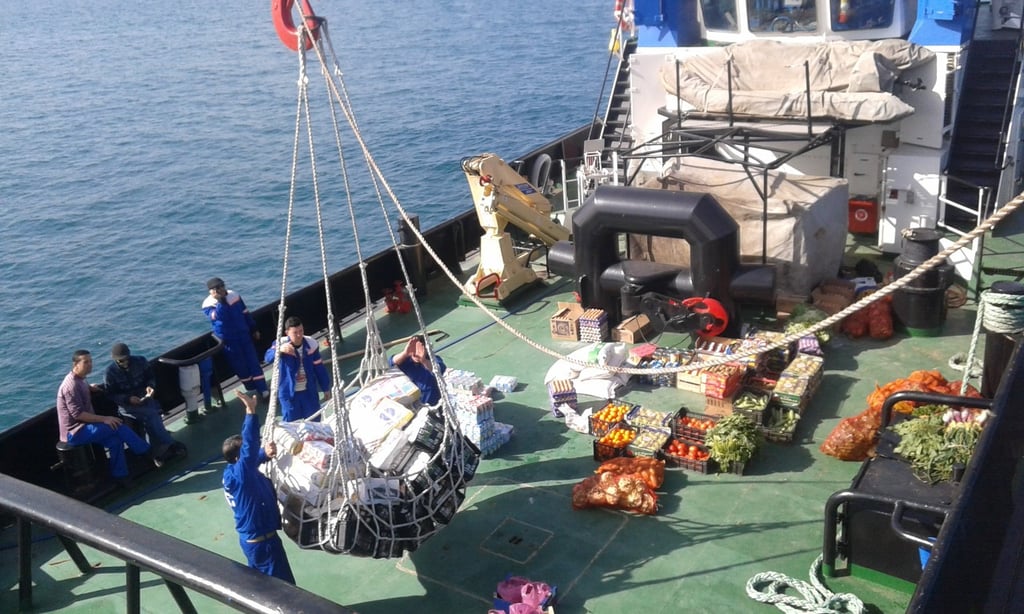
A vessel pulling into port has a narrow window. Berthing slots are expensive, schedules are tight, and every hour at anchor or alongside costs money. In that window, the crew needs to be fed, machinery needs to be maintained, safety equipment needs to be inspected and restocked, and the ship needs to be ready to sail the moment it clears port. Behind all of that — often invisible to the casual observer — is the ship chandler.
Ship chandling is one of the oldest service professions in maritime history, and despite the industry's rapid modernization, its core purpose remains unchanged: to ensure that a vessel has everything it needs to operate safely, efficiently, and comfortably while in port and for the voyage ahead.
More Than a Supply Run
It's easy to think of a ship chandler as simply a delivery service — someone who drops off boxes at the gangway. In reality, professional ship chandling is a complex, time-sensitive logistics operation that requires deep product knowledge, strong supplier networks, regulatory awareness, and the ability to source almost anything, often on very short notice.
A vessel's requirements span an enormous range of categories. On any given port call, a chandler might be simultaneously sourcing fresh provisions for the galley, delivering spare engine parts, arranging for new fire safety equipment to meet an upcoming inspection, supplying ropes and mooring lines, and restocking the ship's medical chest — all within a few hours, and all coordinated to arrive before the vessel sails.
This is the reality of ship chandling, and it demands a level of operational precision that goes far beyond order fulfillment.
Provisions and Catering Supplies
One of the most essential — and most frequent — chandling requirements is provisions. Feeding a crew of 20 to 30 people three meals a day across a multi-week voyage requires careful planning. A good chandler doesn't just deliver food; they help plan supply quantities based on the crew size and voyage duration, ensure quality and freshness, handle customs documentation for bonded stores, and accommodate dietary or cultural preferences within the crew.
Provisions are typically split into dry stores (rice, flour, canned goods, pasta), refrigerated goods (meat, dairy, vegetables), frozen items, beverages, and cleaning and hygiene products for the galley and crew accommodations. Each category requires proper handling, storage, and documentation.
Deck and Engine Room Consumables
Keeping a vessel mechanically sound requires a constant supply of consumables — gaskets, filters, lubricants, cleaning agents, packing materials, and workshop tools. These are the items that the engineering team reaches for daily, and running out of something as simple as the right filter or the correct grade of lubricant at sea can have serious consequences.
Deck department requirements are equally broad: ropes, mooring lines, paint, brushes, protective coatings, deck cleaning products, and a wide range of maintenance consumables. A chandler with solid technical knowledge can help identify the right specification when an officer isn't sure, and can often source obscure or specialized items through a network of suppliers when local stock doesn't cover it.
Safety and Compliance Supplies
This is arguably the most regulated area of ship chandling, and it requires particular attention. Under SOLAS (Safety of Life at Sea) and flag state regulations, vessels must carry specific safety equipment in serviceable condition at all times — and that equipment must be inspected, tested, and replaced on defined schedules.
Life jackets, immersion suits, fire hoses, nozzles, extinguisher refills, pyrotechnics, smoke and heat detectors, CO2 systems, and emergency signaling equipment all fall under strict compliance requirements. A chandler servicing these items must understand not just the products, but the certification requirements — because non-compliant safety equipment can result in detention by port state control, which is one of the most disruptive and costly outcomes a vessel operator can face.
Medical Stores
Under the Maritime Labour Convention (MLC 2006), every vessel is required to carry a specified medical chest, with contents that vary based on the vessel type, crew size, and trading area. Keeping that chest stocked and within expiry is a non-negotiable obligation.
Chandlers supplying medical stores must work with licensed pharmaceutical suppliers and ensure full documentation — including batch numbers and expiry dates — is provided with every delivery. This is an area where shortcuts are simply not an option.
Spare Parts and Technical Items
When a vessel needs a specific spare part urgently — a pump seal, a valve body, a hydraulic fitting — the chandler becomes a critical link in the supply chain. Time is everything. A skilled chandler with strong supplier relationships can often source and deliver a part within hours, preventing a minor mechanical issue from becoming a major operational delay.
This is where local knowledge is invaluable. Understanding which suppliers carry what, who can fabricate parts locally, and how to navigate port customs quickly for urgent consignments separates a capable chandler from a basic order-taker.
The Role of IMPA Codes in Ship Chandling
With thousands of products spanning dozens of categories, accurate communication between vessel officers and chandlers is essential. This is where IMPA codes play a critical role.
The IMPA Marine Stores Guide — published by the International Marine Purchasing Association — assigns a unique six-digit code to every standard marine supply item. When an order is raised using an IMPA code, there is no ambiguity about what is being requested, regardless of language barriers or regional naming conventions. It is the universal catalogue of the ship chandling world, and any serious chandler operates fluently within it.
The guide is organized into chapters covering every supply category a vessel might need. Some of the most frequently referenced include:
Deck Stores — Ropes, fenders, brushes, mops, squeegees, paint rollers, and general deck maintenance consumables.
Engine Room Stores — Gaskets, filters, packing materials, absorbents, and workshop consumables for engineering maintenance.
Electrical Equipment — Cables, lamps, fuses, switches, connectors, and electrical testing instruments.
Safety & Firefighting Equipment — Life jackets, immersion suits, fire hoses, extinguisher refills, and safety signage.
Navigation & Bridge Equipment — Chart tools, signal flags, binoculars, logbooks, and bridge consumables.
Paint & Protective Coatings — Antifouling paints, primers, topcoats, and rust treatments for hull and superstructure upkeep.
Ropes & Cordage — Polyester, nylon, polypropylene, and wire ropes for mooring, towing, and rigging.
Cleaning & Hygiene Supplies — Degreasers, bilge cleaners, deck chemicals, and crew hygiene consumables.
Medical & Hospital Stores — First aid kits, medicines, surgical instruments, and MLC-compliant medical chest items.
Cabin & Galley Stores — Bedding, cookware, utensils, and crew comfort consumables.
Tools & Workshop Equipment — Hand tools, power tools, measuring instruments, and workshop consumables.
Stationery & Office Supplies — Logbooks, regulatory forms, and administrative consumables for vessel record-keeping.
That said, IMPA codes don't cover everything. Fresh provisions, certain technical spare parts, custom-fabricated items, and locally sourced products often fall outside the catalogue — and this is where a chandler's local expertise and supplier relationships become just as important as catalogue knowledge.
What Makes a Good Ship Chandler?
At its core, a great ship chandler is defined by reliability, responsiveness, and knowledge. Vessels don't always give much notice. Urgent orders, last-minute additions, and unexpected requirements are the norm rather than the exception. A chandler that can't perform under pressure is a liability.
Beyond speed, product knowledge matters enormously — being able to advise on specifications, suggest alternatives when something is unavailable, and flag potential compliance issues before they become problems. And throughout it all, pricing needs to be transparent and competitive, with clear documentation that fleet managers can rely on for cost control and auditing.
At Al Safina Supplies and Investment, we provide comprehensive ship chandler services across all major Omani seaports — including Sohar, Salalah, Duqm, and Mina Sultan Qaboos. From fresh provisions to technical stores, safety equipment to spare parts, our team is positioned to meet your vessel's needs accurately, promptly, and professionally — every port call.
Calling at a seaport in Oman? Get in touch with the ASSI team and let us take care of everything your vessel needs.
Al Safina Supplies and Investment
Contact US
+968 9803 0880 (Call)
+968 9717 5515 (Whatsapp)
commercial@assimena.com
© 2026. All rights reserved.
Falaj Al Qabail, Sohar, Sultanate of Oman