
Shoring for Cargo Security: Building Stability from the Inside Out
Learn how timber and steel shoring creates a custom structural framework that keeps awkward, oversized, or fragile cargo firmly in place at sea.
3/30/20262 min read
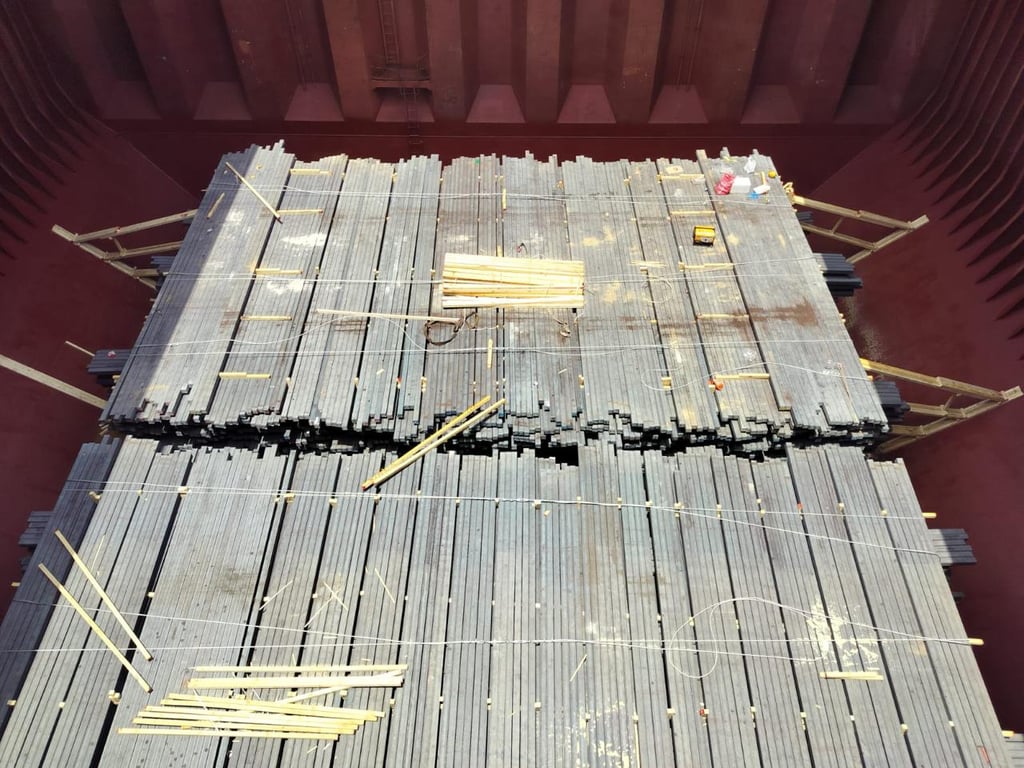
Not all cargo comes in neat, stackable boxes. Oddly shaped loads, fragile goods, and oversized items often need more than straps and chains to stay safe in transit — they need structural support. That's exactly where shoring comes in.
What Is Cargo Shoring?
Shoring is a cargo securing method that uses timber beams, steel props, or adjustable support structures placed around or between cargo units to prevent them from shifting, tipping, or collapsing during transport. Rather than pulling the cargo down or inward like lashing does, shoring braces the cargo from the outside — filling gaps, absorbing lateral forces, and distributing load across the container or hold floor.
Think of it as building a custom framework around your cargo. The shoring structure essentially becomes the cargo's scaffolding for the duration of the voyage.
When Is Shoring the Right Choice?
Shoring is particularly valuable in several scenarios. When cargo cannot be easily lashed — such as loose reels, cylindrical objects, or palletized goods stacked unevenly — shoring provides the lateral constraint needed to keep everything in place. It's also commonly used in Ro-Ro (roll-on/roll-off) operations and breakbulk shipping where deck cargo is exposed to the full range of vessel motions.
Another key use case is fragile or high-value cargo that must not be subjected to the clamping pressure of straps. In such cases, shoring creates a protective barrier without applying direct force to the cargo surface.
Materials and Methods
Timber shoring remains the most widely used material due to its availability, workability, and load-absorbing properties. Shoring timbers are cut to fit the specific geometry of the cargo hold or container, braced against structural members, and secured so they cannot shift. Steel adjustable shores (also called steel props) are used for heavier, more demanding applications where timber alone isn't sufficient.
A well-executed shoring plan takes into account the expected forces at sea, the structural strength of the hold or container walls, and the weight distribution of the cargo — all of which require professional expertise to assess correctly.
Compliance and Professional Execution
Like all cargo securing operations, shoring must be carried out in line with the IMO CSS Code and any applicable flag state or port authority requirements. A properly documented cargo securing plan is essential, especially for port authority inspections and insurance purposes.
At Al Safina Supplies and Investment, our experienced technicians design and install shoring arrangements tailored to each shipment's specific requirements — ensuring compliance, safety, and peace of mind for vessel operators and cargo owners alike.
The Bottom Line
Shoring might not be the most visible form of cargo securing, but it is often the most critical — particularly for non-standard loads. Done correctly, it transforms an unstable, awkward cargo arrangement into a secure, voyage-ready package.
Operating out of any seaport in Oman? Get in touch with ASSI for professional shoring services.
Al Safina Supplies and Investment
Contact US
+968 9803 0880 (Call)
+968 9717 5515 (Whatsapp)
commercial@assimena.com
© 2026. All rights reserved.
Falaj Al Qabail, Sohar, Sultanate of Oman